
My first meeting with Kharkiv
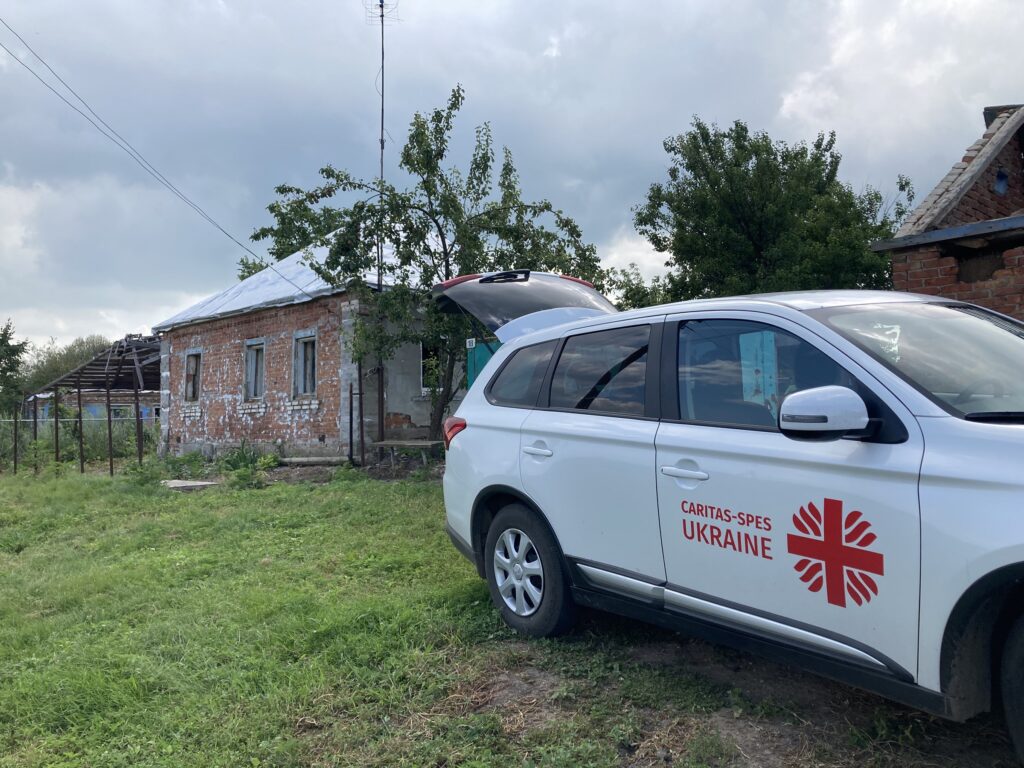
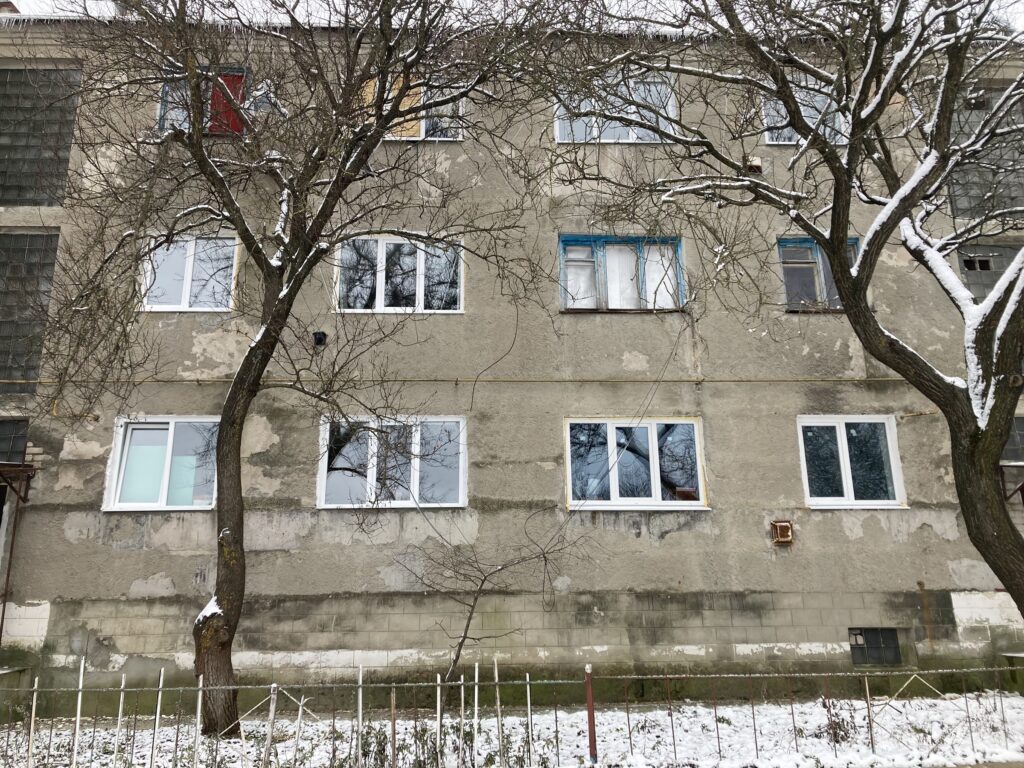
Large fields line either side of a highway heading towards Kharkiv, eastern Ukraine. We are on our way to the large city in the east on an early March day to inspect buildings that have been repaired with Norwegian funds. They simply call it the “Norway project.”
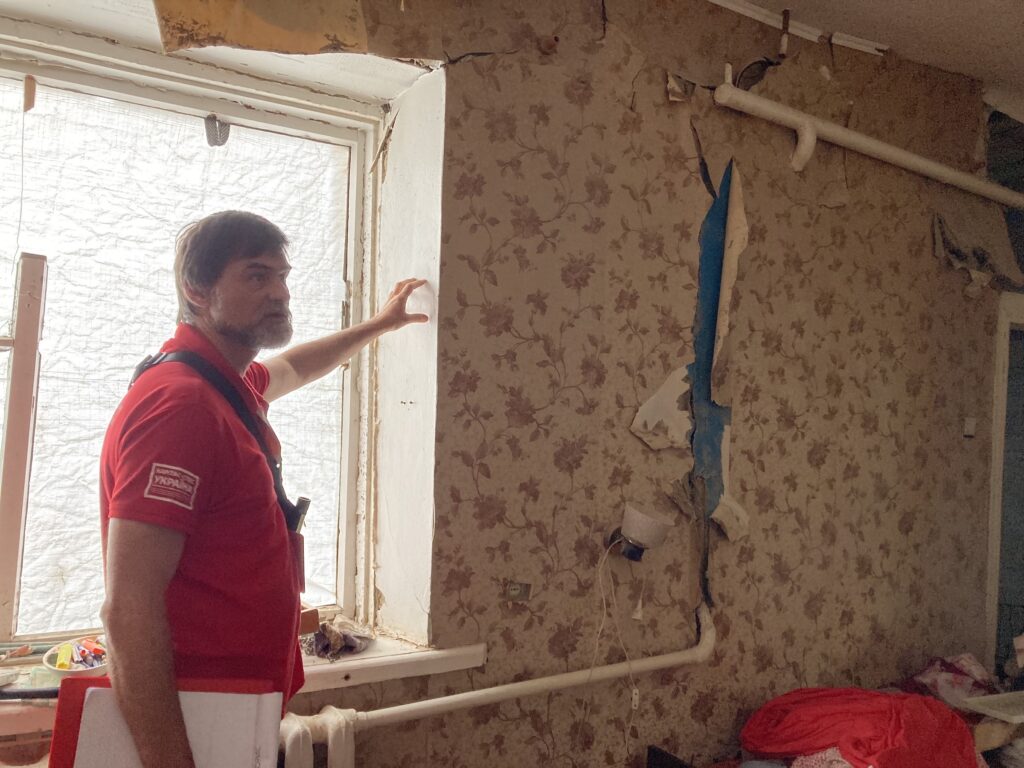
I work for Caritas Norway and we are helping with the reconstruction, we are repairing wells and distributing emergency response to those who need it most. This is my first trip this far east.
On the way to Kharkiv we pass a couple of ice fishermen on a small lake. Men in bubble jackets and winter boots sit quietly on the ice.
Sometimes the peace is interrupted by the air raid siren warning of bombers, missiles or drones full of explosives, but these guys sit quietly and wait for fishing luck and perhaps peace.
We, internationals, people working in Ukraine, move quickly to a bomb shelter when the alarm goes off. On the way, we get a notification on an app about a Russian attack on Kharkiv. Often the app warns before we hear the alarm. It is Mark Hamill (Luke Skywalker) who has lent his voice. He says sternly: Attention, Air Raid Alert, proceed to the nearest shelter. Don't be careless, your overconfidence is your weakness. Arrogance is the downfall of those who risk too much. At least according to the app.
Donbas
We turn into a restaurant along the road and quickly move past a staff member who recognizes people like us (foreigners who go to bomb shelters). With a wry smile, they point in the direction of the bomb shelter. We seek refuge outside the reality of most Ukrainians. They continue their day uninterrupted.
Kharkiv has seen its share of war. Never occupied, but partly bombed. The ruins of several key buildings, such as the bombed-out central police station, stand as a reminder of what can happen again. The city was briefly the capital of Ukraine, and it forms the gateway to the more industrialized part of the country – Donbas, which is now partly under Russian control. Although all advertising posters are in Ukrainian under a new language law, the city is predominantly Russian-speaking. Many people feel most comfortable in Russian, especially older people
Most people speak Russian
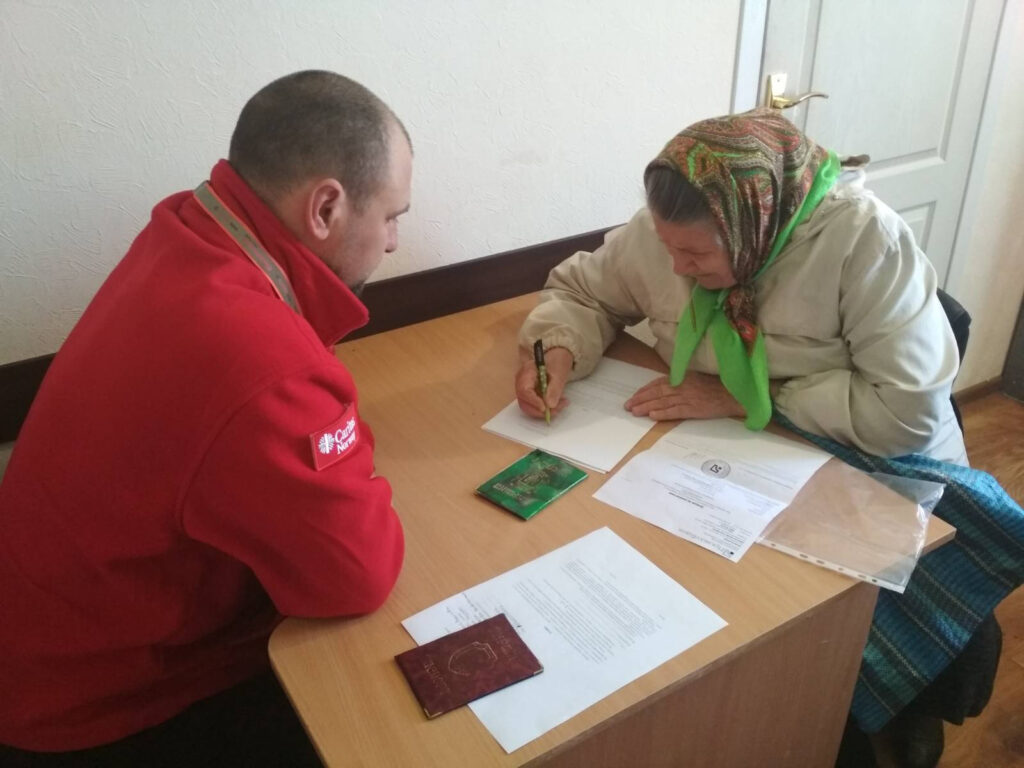
In Kharkiv I interview a lady who is responsible for our project. I am going to make a short video clip to promote the work we are doing and inform her that she can speak either English or Ukrainian. I think I am doing her a favor by offering both languages, but she just looks at me. I don't know if she is good at English so I quickly add, just say it in Ukrainian and we will translate. Can I speak Russian, she says. Yes, of course I think. Almost everyone here is Russian-speaking. Ukrainians with Russian as their mother tongue. No less Ukrainian for that.
Some of my Ukrainian colleagues in Kyiv disagree with this. In Ukraine we speak Ukrainian, they have often stated. Some speak Russian because we were occupied by the Russian Empire and then the Soviets, but Ukrainian is our language, say many of my Western Ukrainian colleagues. War makes the dividing lines harder and it has become important to be on the right side, also linguistically.
Sleeping in the basement of the hotel
The alarm goes off every two or three hours. Ukrainian forces have shot down several Russian fighter jets and the Russians are responding with attacks. There's really no point in sleeping in the hotel room since we have to go to the bomb shelter when the alarm goes off. We sleep in the basement of the hotel. That's fine.
With a Norwegian sleeping pad and sleeping bag, I lie down in a corner of a room that looks like an old ballroom in happier days. They've probably had both a wedding and a funeral here. Now it's the latter. Even though war is hell, that doesn't mean people don't dream of a better tomorrow and reminisce about a happy yesterday.
I'm not uncomfortable where I'm lying. Actually, it's comfortable enough when you think about those lying at the front, in sleeping bags, 40 kilometers away, in minus 15, waiting.
Mobilization of soldiers
One damp evening in Kyiv a few days before I left for Kharkiv, I got into a conversation with a Finn fighting on the Ukrainian side. He told me about life on the front, the cold and Russian tactics. Rows of young men, newly arrived Russian soldiers, who are sent forward against the Ukrainian defenses. They are all killed, of course, he said dryly, but the “arrangement” gives Russian commanders the opportunity to see where the Ukrainians have got stuck. A rather morbid way of doing it, I say. Yes, we know the Russians well, says the Finn as he takes a sip of the cherry wine we are both drinking and smiles sullenly.
The fight for land continues, and the political debate about mobilization is in full swing. The Ukrainian military now wants to mobilize 500,000 Ukrainians, 1.3 percent of the country's population, in other words. In Norway, that would mean 72,000 men and women who would have to report to the nearest muster station. I don't know how we would react.
Many who are mobilized never return. Mobilization is not done to deter, but because there is a desire to move the front, which in turn means that more men will die at the front in order to get a new front.
Mobilization is therefore not particularly popular. The bill has stalled in parliament. The bill has thousands of proposed amendments. It is not just weapons and ammunition that are missing. Also political will for the inevitable – mobilization. No one wants to be left with the full responsibility for the destruction of a generation. The question is whether anyone will survive politically by losing half the country if Russia has time to get stuck. There are no good solutions in war, but some choices may be inevitable.
Putin will lose
On our way home from Kharkiv, after a week on a basement floor, we pass a lady on the side of the road in a small village. She is picking up trash. Maybe things people have thrown out the window. Or things and debris that pile up when everyone's focus is on war. While the Russian army slowly moves west, the elderly lady moves in the same direction, but with a different goal. While one brings misfortune, the old lady fights for her Ukraine, one small clean-up project at a time, one step away from a past she is now frantically trying to clean up.
So is arrogance doomed in Ukraine? Ultimately, Putin will lose. Maybe not on the ground, maybe not right now, but Russia has no future with its Ukrainian neighbors. Our joint contribution makes it possible for Ukraine to not become a vassal state for Moscow, helped by soldiers fighting like lions on the front lines and Ukrainian civil society supporting the state in rebuilding the country. My hope is that Ukraine will get the peace they deserve on their own terms, without a generation perishing.