
- I'm looking forward to a "real" meal

It's still early morning in Bouar, in the northwest of the Central African Republic, but the weekly market in the village of Ngeguene is already bustling with life.
Anasthasie, a mother of three, goes from stall to stall, checking out clothes, food and household items. She greets neighbors and good-naturedly haggles with vendors when she sees something she likes.
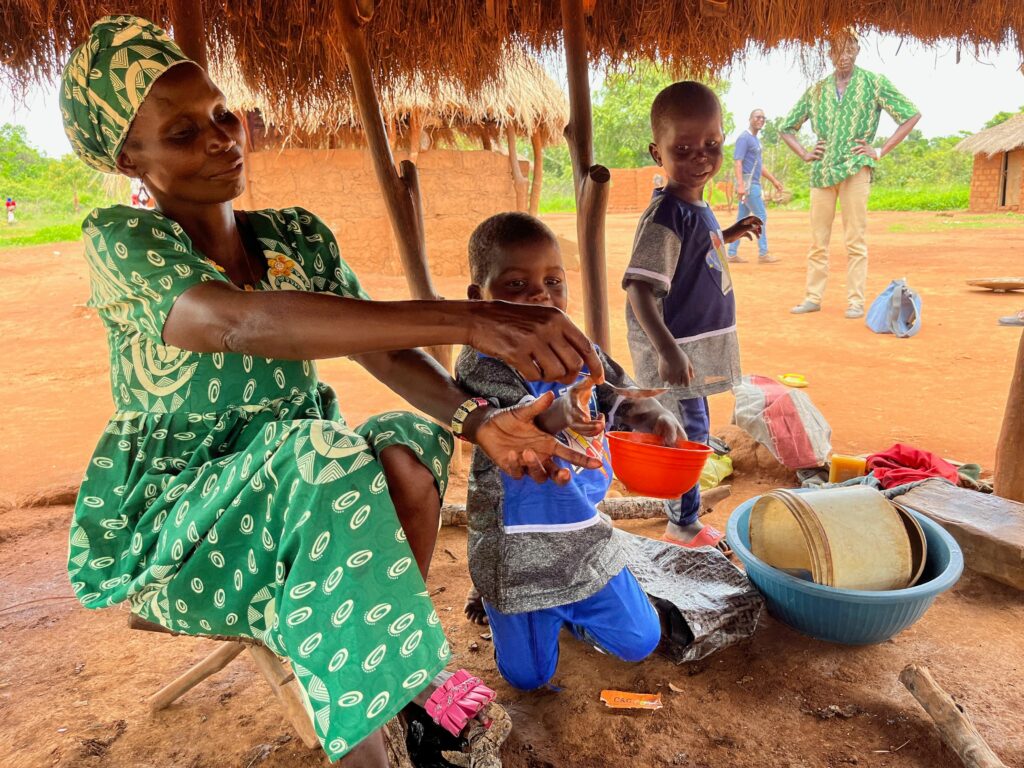
A few hours later, Anasthasie smiles as she stirs a small pot of boiling meat outside her home. Nearby, her two youngest sons, Moise and Gael, run after each other, laughing, trying their best not to get dirt on their new matching outfits.
Had to start all over again
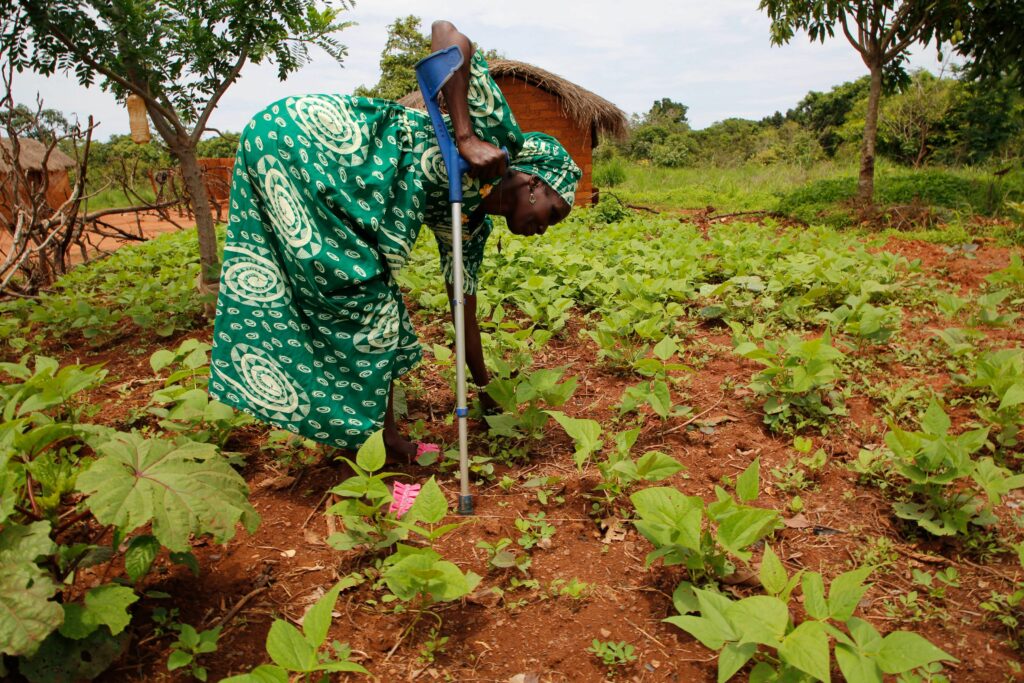
Like many others, Anasthasie’s family was displaced after armed attacks on their village last year. Now living in an abandoned home in a nearby village, they have had to start life from scratch. During the attacks, they lost their farmland and livestock – their primary source of income – and all their belongings. Anastathie, who injured her knee while fleeing in the middle of the night, now walks with crutches and can no longer help her husband on the farm.
“The children always say, ‘Mom, I’m hungry. Mom, I want some food,’” she says, and continues:
– But often there is nothing to give them. They sip water to fill their stomachs. When there is not enough food, I have so many worries. I am constantly thinking about tomorrow and how we will survive.
Anasthasie, participant in the Norwegian-funded Emergency Food Security and Agricultural Assistance project
The help is a blessing
Anastathie and her family are among those receiving cash assistance through our Emergency Food Security and Agricultural Assistance project, which is funded by the Ministry of Foreign Affairs. This means that they all eat more food – and better quality food – every day. The result is that more children come to school. When they don’t have enough for breakfast or lunch, many keep their children at home.
“The money we receive has really helped and enables us to start rebuilding our lives,” she says.
– I can buy what we need, and even some treats every now and then – like this meat. It's such a blessing.
The kitchen garden offers new possibilities
Through the project, Anastathie has also received what she needs to grow vegetables in a kitchen garden right outside her house. Now she looks forward to harvesting her own food, and selling the surplus and other small items at the market. But first, she is looking forward to enjoying a “real” meal with her family, and seeing the children fall asleep well and well-fed, under the warmth of their new blanket.
The article was written by Jennifer Lazuta, Catholic Relief Services (CRS)
FACTS:
The Emergency Food Security and Agricultural Assistance project in Bouar is funded by the Norwegian Ministry of Foreign Affairs via Caritas Norway. It is part of two to three-month long emergency preparedness projects, which are implemented by Catholic Relief Services (CRS) and Caritas Bouar.
The goal is to save lives, alleviate suffering and preserve the human dignity of conflict-affected families in the northwestern part of the Central African Republic. The project consists of cash transfers to strengthen food security and conflict management training for community leaders.