
Giving refugees new opportunities
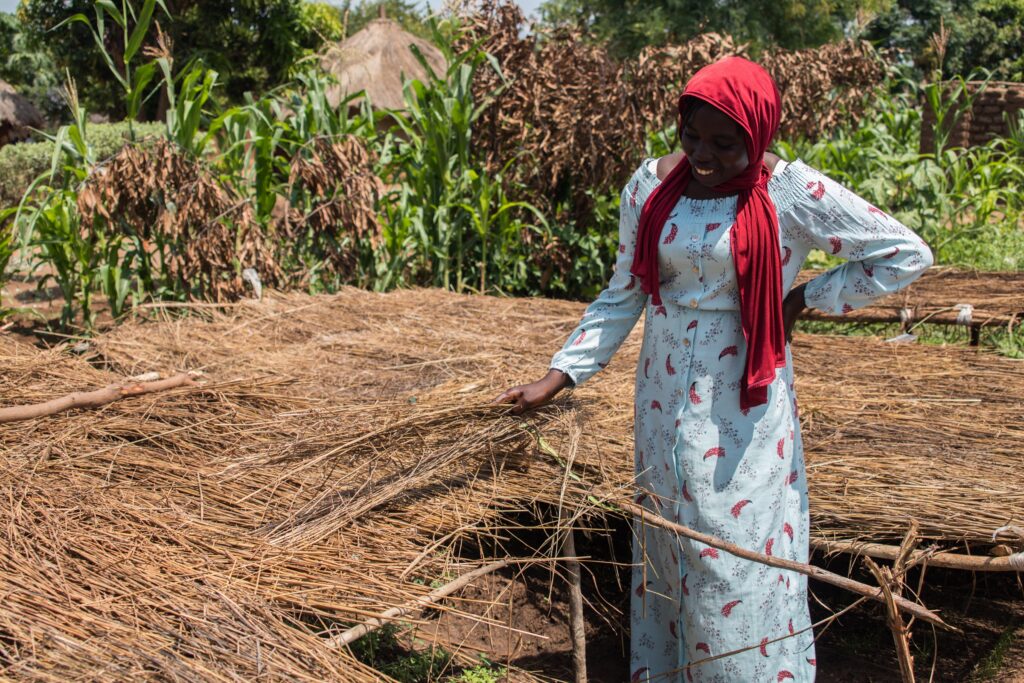
Thursday June 20 marks World Refugee Day. In this connection, we want to highlight Uganda as an example to follow.
Here, refugees from South Sudan, Sudan and DR Congo learn to become self-reliant through sustainable agriculture. This is a bright spot in a time characterized by bleak records caused by climate change, wars and conflicts, political and economic crises. Which in turn has led 120 million people displaced - a figure that has risen steadily over the past 12 years.
To stop the trend, something must be done about the root causes of displacement. But this is where the international community is failing - and the gap between humanitarian needs and financial support is widening..
Refugees are a resource
This affects the countries that receive the most refugees in the world, such as Uganda. Despite major social challenges, the country has been a stable refuge for millions of people fleeing wars and disasters in neighboring countries. Its liberal refugee policy has helped save hundreds of thousands of lives. Instead of seeing refugees as a burden, they have been welcomed as a resource and contributor to the development of the border areas in the north, which are still affected by the civil war that lasted until 2007.
Be awarded a patch of land
Although underfunding has made the work more difficult in recent years, the Ugandan authorities are facilitating a solid and comprehensive response. This is done by including refugees in the country's development plans, with the aim of improving living standards. In the country's 13 settlements, all newly arrived refugees will be given a plot of land on which they can grow food. They get access to education, work and can move freely in society. When it is safe to return to their home country, they can do so, and then return to their new home in Uganda. The work that benefits refugees must also benefit a percentage of the local population. This is to avoid conflicts, as well as helping to improve living conditions in general in the community.
Europe, with its strict asylum policy and high border walls, has a lot to learn here. They should look to Uganda for inspiration. Instead, they are reducing aid to a country with 1.7 million refugees. It's sad and affects the weakest.
It pays to help
Through Caritas 's work, we see that it is possible to give refugees a better life through simple measures - such as access to seeds and equipment, as well as training in climate-smart agriculture. Through increased food production, which in turn contributes to a reduction in malnutrition, investments in local businesses and income-generating activities in the community, we improve the living conditions of 42,000 people every year. With the support of the Norwegian government.
One of them is Suraya, who fled the war in South Sudan in 2016. In her search for something to do, she was introduced to Caritas and joined our food security project in Bidibidi. She now grows her own food and shares her experiences and knowledge with others in the same situation. Her story shows that it helps, and that there are bright spots in a time of crisis. We hope that millions of others will have the same opportunity, but then the global community must wake up and contribute.