
Locally led and comprehensive aid pays off

Caritas is present where humanitarian needs are greatest and sees with despair that the willingness to help decreases with each passing year. By focusing on locally led and comprehensive efforts, the trend can be reversed.
It is estimated that 300 million people will need humanitarian aid and protection in 2024 as a result of conflicts, climate change, famine and other reasons. Not everyone will receive aid, but the UN's goal is to reach 180 million in 73 countries. This will cost the international community more than 46 billion USD. But the outlook does not look bright. Compared to the same period last year, international donors have given 35 percent less in support this year. This is part of a trend where the willingness to give decreases, while the needs increase. An important reason is the ripple effect of the Ukraine war, and that Western countries prioritize their own neighboring areas.
Many crisis-stricken countries
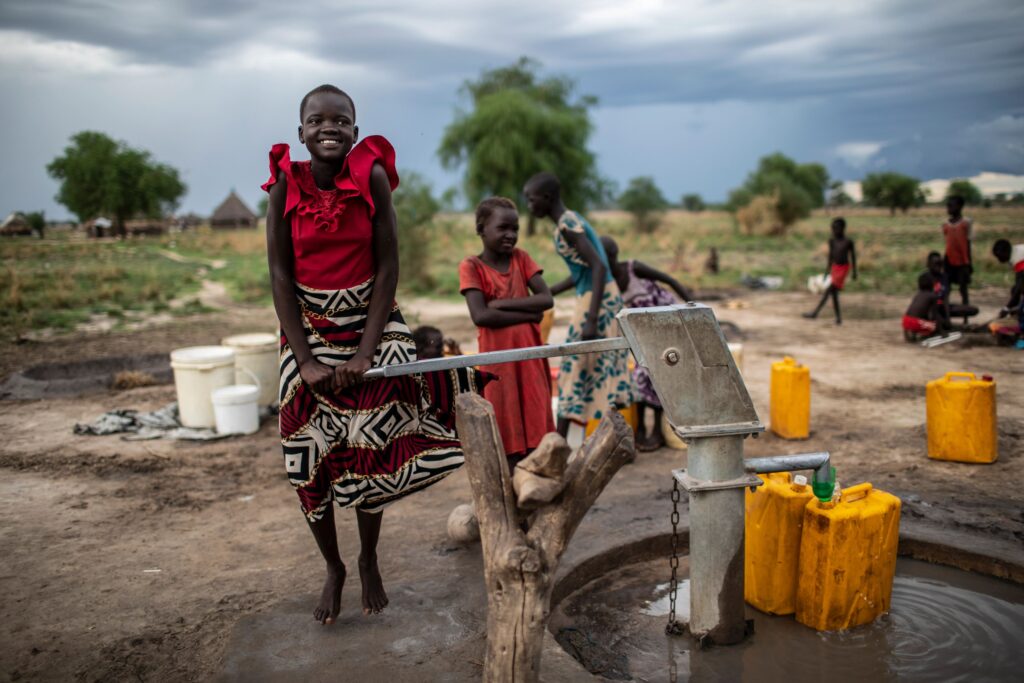
At the same time, resource scarcity has contributed to more conflicts, driving people to flee and creating hunger crises. In Gaza , half the population is threatened by famine , while more than seven million people in South Sudan are at risk of acute food shortages. In northern Nigeria , nearly 4.4 million children are affected by acute malnutrition, while 46 percent of the population in the Central African Republic is extremely vulnerable, and the humanitarian assistance they receive is not enough to cover basic needs.
Millions of people are still living in need as internally displaced people after years of war in Syria . They depend on help to survive and rebuild their homes. The same applies to Ukraine , where nearly half the population needs humanitarian aid. In Venezuela, stores are overflowing with goods, while millions of people are starving due to sanctions and high prices. The list of countries affected by crisis is endless, and we mention some of the ones we are involved in ourselves, through local Caritas organizations.
The trend must be reversed
A total of 238 million people were living in acute food crises in 2023, and the number is expected to rise in the coming years. This trend must be reversed. The new Norwegian humanitarian strategy will soon be presented. We believe that the government's vision and main priorities should be to ensure locally led and comprehensive efforts. And with its expertise and experience, as well as trust in the UN system, Norway is well placed to take global leadership in the fight against hunger.
At a time when needs are increasing and the willingness to give decreases, it is more important than ever that the government's focus on food security continued and strengthened – in the form of funding responses to acute crises and prevention of future crises.

Focus on local actors
The approach must be holistic, also in acute crises, with the goal of strengthening long-term food security and future preparedness. This in turn requires a broader focus on local actors and locally led efforts, where possible. Specifically, this involves supporting local food production, processing and commercialization by transferring expertise to small-scale farmers, as well as providing them with access to technology, vocational and agricultural education. The goal is to enable countries to produce with better quality, become competitive, and in the long term be able to establish businesses and create jobs.
By making countries affected by humanitarian crises more self-reliant and better equipped to deal with future challenges, the need for international donor aid will also decrease. In a time of increased need and reduced willingness to give, prevention is more important than ever. It will pay off – both in the short and long term.