
Making a film about Caritas projects in DR Congo
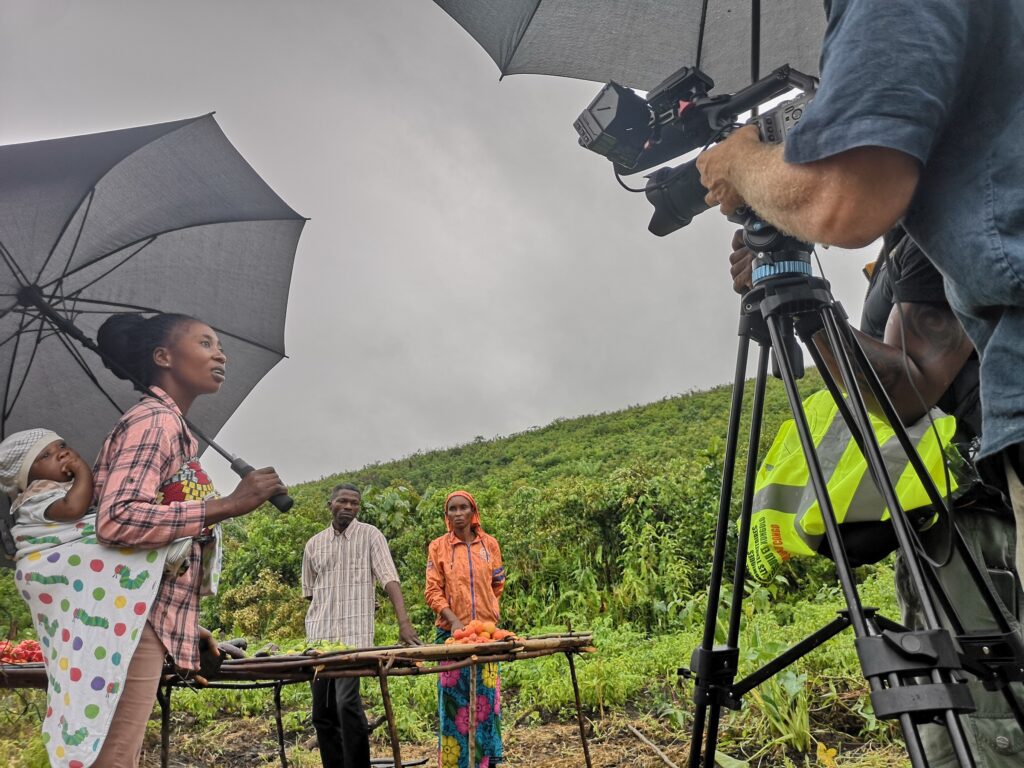
At the end of October, Norad was in the field to make a film about our food security program in DR Congo. For more than ten years, Caritas Norway, with support from the Norwegian government, has been working with Caritas Congo to help starving families.
- We have heard a lot of good things about this program and therefore wanted to bring our experts into the field, both to see with our own eyes the good results that have been achieved, but also to document these experiences with communication materials that we can bring home to Norway. It is very important for us to be able to show the results of the support that the Norwegian government, through our collaboration with Caritas, provides to the people of DR Congo through the aid budget. It is also good to be able to convey to the Norwegian people the satisfaction and expectations that the participants in this program express to us.
Martha haukaas, director of communications at norad
Together with his team of communication and food security advisors, Haukaas was welcomed by Isabelle Nkusu, the leader of the Kasangulu territory in the west of the country.
Grateful for the support
Isabelle Nkusu, for her part, thanked the Norwegian government for the support they receive through Caritas' project work in the country.
Along with representatives from the Norwegian Embassy in DR Congo, Norad was accompanied on the trip by Thaddée Barega, Deputy Secretary General and Quality Manager in Caritas Congo asbl and Senior Advisor in Caritas Norway, Robert Hodosi, who has coordination responsibility for the projects.
Caritas Norway and Caritas Congo started working together on a pilot project in 2011, and have since then collaborated on two four- to five-year programs within food security. In addition, Caritas Norway and Caritas Congo are collaborating on a project to combat the social and economic impact of the coronavirus pandemic and on projects that provide education and training to children and young people who have worked in the mining industry in the country.
Good results
In the period 2018-2022, the food security program has had a budget of almost NOK 26 million and has reached 7,200 farming households with very good results.
- 82% of small users in the program now eat 2-3 meals a day.
- 61% of households have increased their income.
- 93% of households grow several varieties of vegetables. This has given them a more varied diet and reduced their vulnerability, as they now have multiple sources of income.
In Mvululu (15 km from Kasamgulu), the Norad delegation met some of the participants from Caritas projects in Kinsiona, Banna, Kindamba and Mvululu. They also visited an exhibition of agricultural products, a fish farm and a kitchen garden in Kinsiona (11 km from Mvululu); and beekeeping and reforestation projects in Kindamba (7 km from Mvululu). They also received a demonstration of biofertilizer use and visited an agricultural cooperative in Banna (17 km from Mvululu). Several of the program participants were interviewed and filmed by Norad.

Climate-adapted agriculture
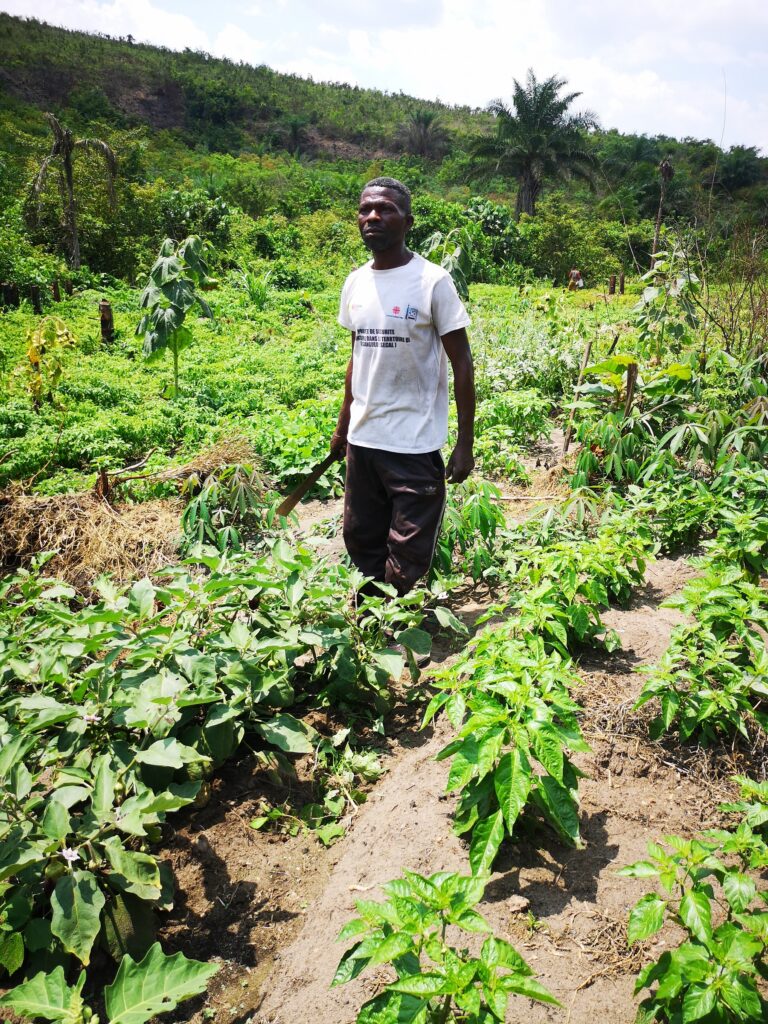
Simon Ntimanssiem (52) and his wife have seven children and a small farm. The family is among those who have received start-up assistance and training from Caritas to get started with climate-adapted agriculture. They produce several different vegetables (tomatoes, peppers, spinach, eggplant, etc.) primarily for their own consumption, but they sell the surplus at the market. A varied and nutritious diet provides better health for the whole family.
Climate-adapted agriculture can help to reduce the negative effects of climate change on plant growth and water quality. Increased and more intense precipitation and higher temperatures require measures such as drainage, crop rotation, choice of varieties and species and adapted fertilization. For Simon, the training he has received has made a big difference to his everyday life.
- Before I was trained, I worked a lot without results. After I received training from Caritas, I work much less and still get good crops.
Simon ntimanssiem, smallholder farmer and participant in Caritas 's food security program
One of the world's worst crises
DR Congo is affected by one of the world's worst and most complex humanitarian crises. While the situation is relatively stable in parts of the country, armed conflicts and natural disasters in the east have forced nearly six million people to flee. According to the UN, 27 million people in the DRC depend on humanitarian aid to survive and 40 percent of the 92.38 million population is undernourished.
(Article written by Guy-Marin Kamandji, Communications Manager at Caritas Congo)